
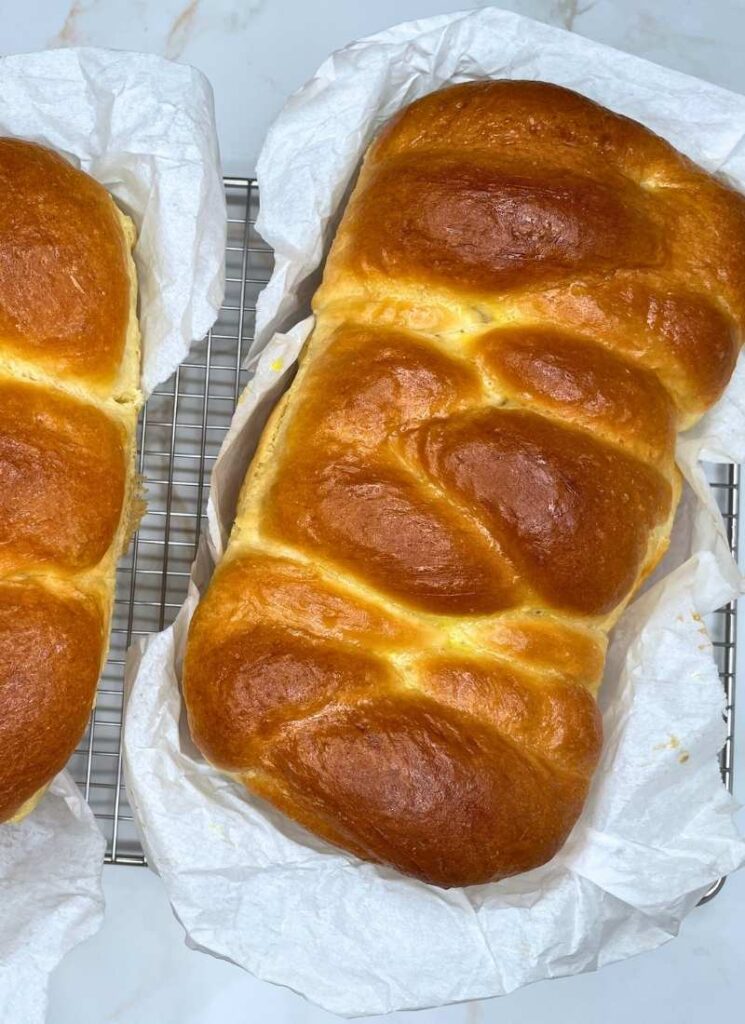
The Ultimate Buttery Brioche Bread (Loaf)
Rich, buttery, and slightly sweet, this classic French bread recipe is as indulgent as it is versatile. Today, I’m sharing my go-to buttery brioche bread loaf recipe—perfectly golden on the outside, pillowy and tender on the inside.
Whether you’re slathering it with even more butter and jam for rich breakfast or turning it into the ultimate mascarpone French toast, a good brioche loaf makes everything feel a little more special.
Why you’ll love this brioche loaf
- Incredibly Soft and Rich—Thanks to eggs and butter, brioche has a soft, almost cake-like crumb.
- Buttery Flavor—Every bite melts in your mouth.
- Filling—Because this is an enriched dough, it’s much more filling and nourishing than an ordinary bread loaf
- Versatile—Great for sweet or savory pairings, French toast, bread pudding, sandwiches, bread puddings and casseroles.
- Make-Ahead Friendly—You can prepare the dough the night before and bake it fresh in the morning.
What is brioche bread?
Unlike traditional lean breads made with just flour, water, salt, and yeast, brioche is an enriched dough—meaning it contains eggs, milk, sugar, and a generous amount of butter. This combination gives it a golden crust, slightly sweet taste, and a light, airy texture that’s almost cake-like.
Often enjoyed as a breakfast bread, dessert base, or even in savory dishes like gourmet burgers, brioche strikes the perfect balance between indulgence and versatility.
Where we live in the Pacific Northwest, brioche hamburger buns are hugely popular. Most people I know enjoy their brioche bread more often from fancy hamburger joints than bakeries. This said, I brioche bread really is sweeter and more cake-like than it is bread-like in my opinion.
Only 6 Ingredients Total
Butter—you knew this ingredient was going to be included! Butter, and fat content in general, helps to tenderize the gluten in bread and transforms this loaf of bread to be a little bit more like cake than ordinary bread.
Eggs—eggs add structure and promote rise by trapping air. This allows brioche bread to have a much taller profile than your average bread loaf.
Sugar—adding just a bit of sugar to this buttery brioche loaf gives more than just sweetness. The sugar content also helps to retain moisture as well.
All-purpose flour—it’s a classic flour choice that creates a traditional brioche loaf. You can also experiment with bread flours if you would like a slightly chewier result.
Milk—I use whole milk in this recipe. However, I have made brioche bread without milk before (when we were all out), and it still turns out nicely. Eggs and butter are two enriching ingredients that cannot be skipped, however.
Salt—I prefer to use a simple sea salt for my baking as it has a more complete and rounded flavor than kosher salt. Plus, it has trace minerals!
Working with brioche dough
One of the most intimidating things about working with enriched doughs is that they are often stickier and more difficult to work with for a beginner. But if you’re a beginner, don’t fret! You can, indeed, make this recipe and conquer your dough fears.
The secret to working with difficult and/or stickier doughs is to chill them in the fridge after you’ve completed the first rise. I also recommend working on a generously floured work surface and using a bench scraper for dividing the dough.
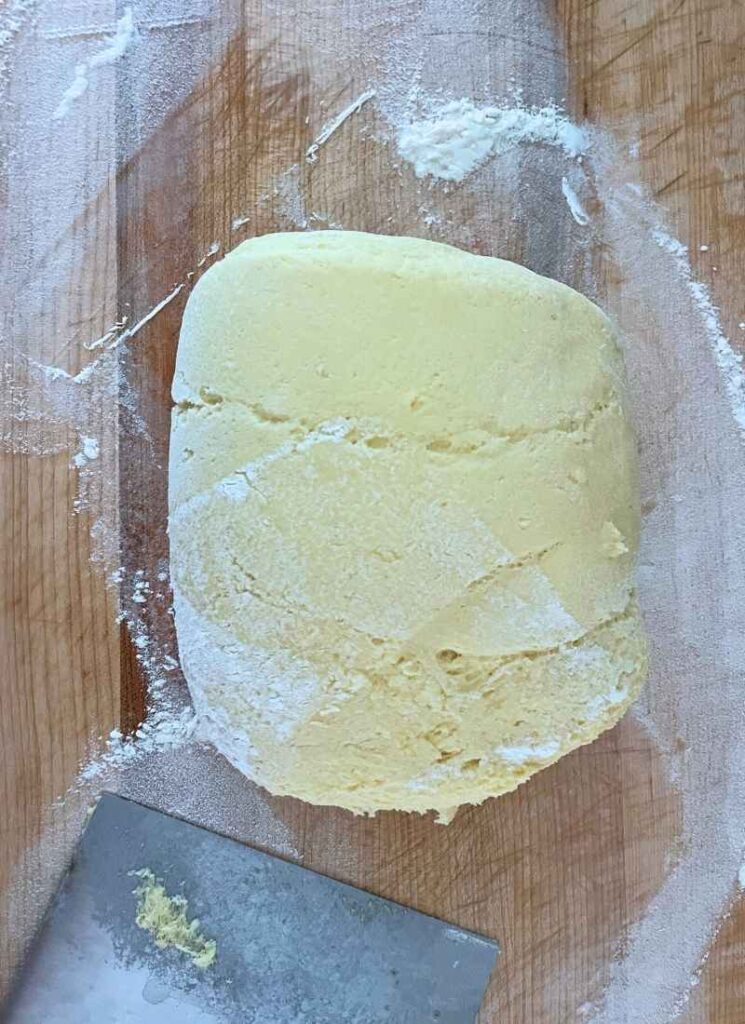
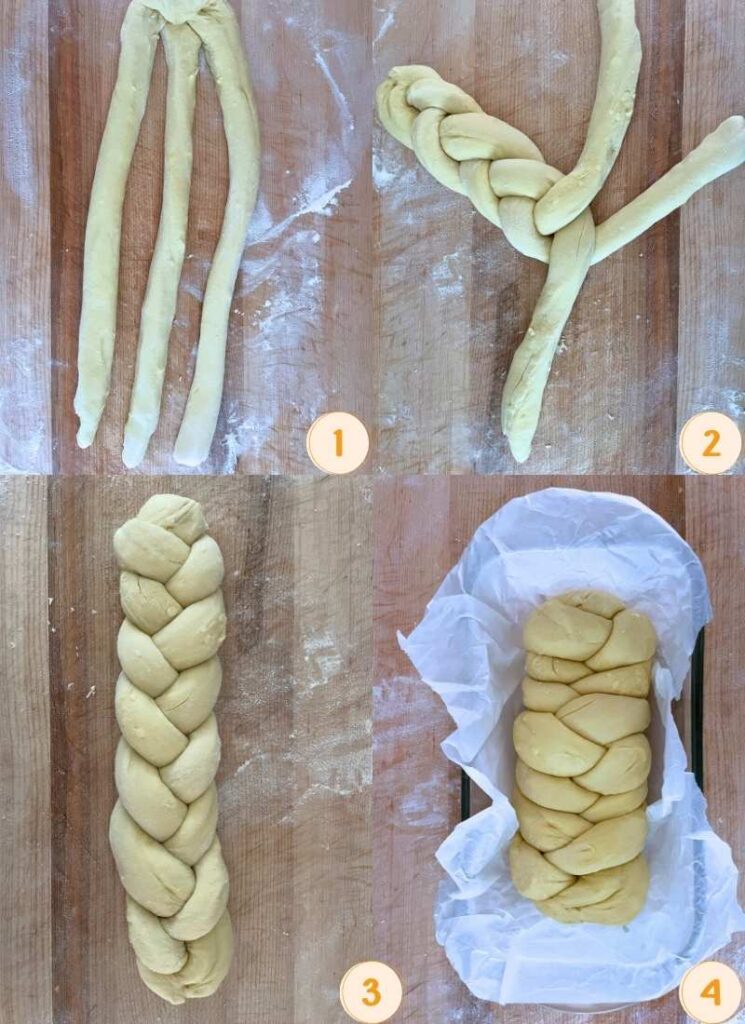
Shaping the dough
This recipe makes two loafs, so you can choose to make two identical loafs. Or, you can make a braided loaf and one with six balls placed in the loaf plan for a more traditional look.
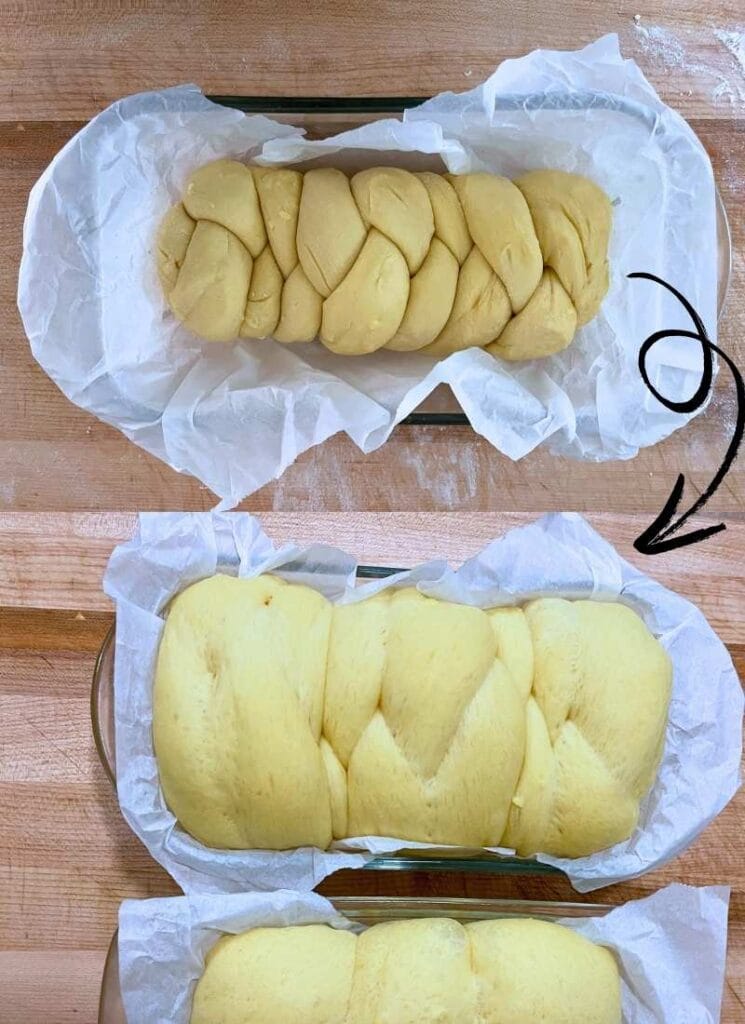
Allow for a sufficient 2nd rise (after shaping)
The first rise for your dough will happen in the bowl that you mix the dough in. But the don’t overlook the second rise that occurs after shaping!
This step is particularly crucial if you are going for high altitude loaf as there isn’t as much oven spring that happens when baking at 350 degrees Fahrenheit.
I find that brioche bread takes a good while to bake in the oven, and because it’s not in a dutch oven but bakes uncovered, it means you’re baking at a lower temperature to ensure its fully baked through without getting too brown.
Tips for Brioche Success
- Room temperature ingredients help everything blend smoothly.
- Don’t rush the kneading—it takes time to develop the gluten and get that signature brioche texture.
- Overnight chill improves flavor and makes shaping easier.
- Egg wash gives it that gorgeous golden crust!
Serving Ideas
- Toasted with butter and honey (lemon curd or marmalade are lovely, too!)
- The ultimate French toast or bread pudding
- Brioche grilled cheese or croque monsieur casserole
- Fancy sandwiches (hello, smoked salmon or prosciutto & brie!)
Final notes
Brioche may take a little extra time and care, but once you taste that first buttery slice, you’ll know it was worth it. Whether you’re baking for a weekend brunch or just want to level up your homemade bread baking abilities, this loaf is a beautiful place to start.
My next baking goal is to repurpose one of these bread loaves in a croque monsieur casserole recipe for Easter. I hope you come back again to hear how it turns out. Or, better yet, join our subscribe to our mailing list for updates straight to your inbox!